Monday, April 15, 2019
Dave Metz's Blog: Coast Guard
Dave Metz's Blog: Coast Guard: Except from my coast guard novel. A Slow Grating Death The executive officer, a lieutenant junior grade, who...

Coast Guard
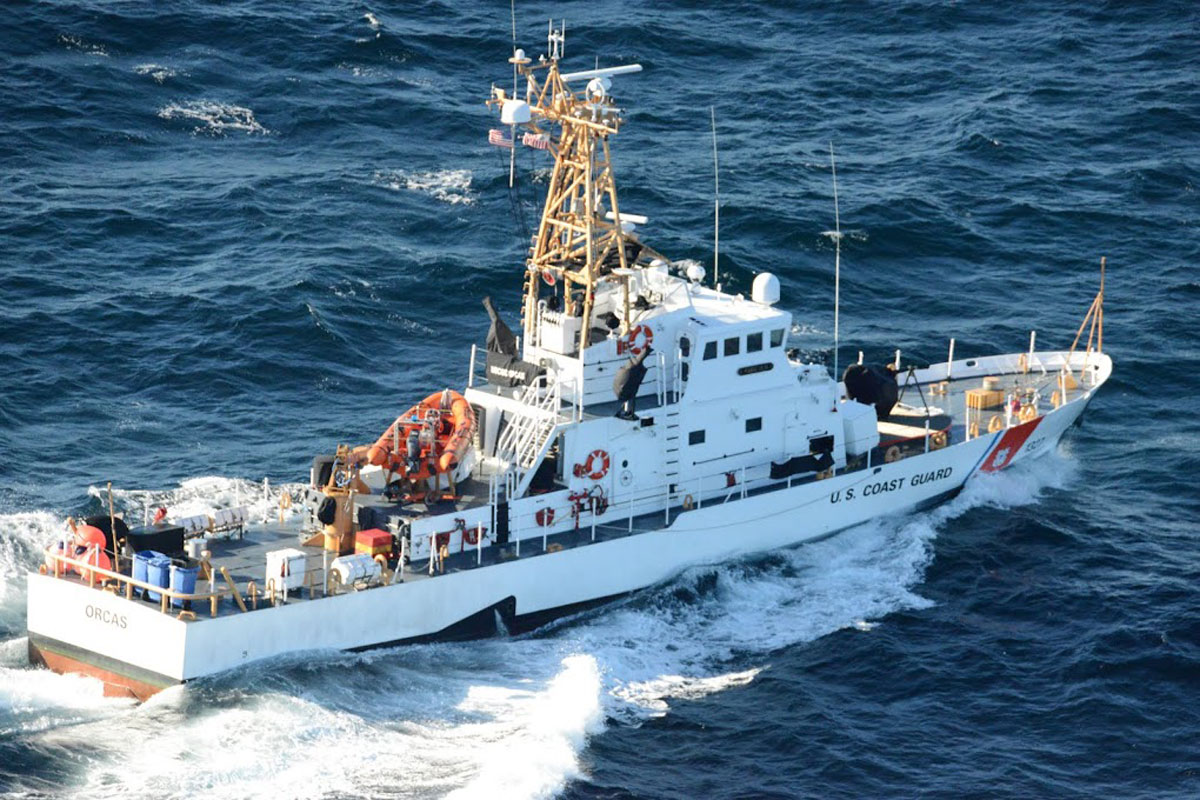
Except from my coast guard novel.
A Slow Grating Death
The executive officer, a lieutenant
junior grade, who we simply called XO, was in the process of getting three of
us housing when I arrived, but it was taking time. I had to live on board the
ship. “You don’t mind staying on the boat for a couple of weeks until we get
you housing?” he asked. I said I didn’t mind but really I did. What else could
I say? It was miserable living on board. I had virtually no privacy. I had to
store my bike and most of my possessions in the cab of my little truck; I
didn’t have a canopy. Each time I opened the door in the parking lot to get
something, a bunch of other things that I had crammed in there would fall onto
the pavement. I didn’t have pots or pans or any other household items, just
exercise equipment, hiking gear, and books. I missed nature by being on the
ship.
I lived in the forward
birthing compartment for the first few patrols, where no human being should be
made to live because of the beating it took, being right under the bow of the
ship. It was a serious design flaw to put a birthing compartment so far forward,
like it was meant to be a punishing chamber for the lowest caste of the crew. I
felt like a sardine packed in there with five other guys. It was no bigger than
a walk-in closet, and the floor was always sopping wet and the walls were
covered in mildew, which the captain and XO didn’t know about. They never
ventured to this part of the ship. It was a coffin basically, designed for six
low-ranking crew members. If you weren’t dead yet you soon would be if you
slept in there. The night of my first patrol the sea was so rough that each
time the ship hit a wave, the bow would plummet and I’d find my face, for just
a split second, plastered to the bunk above me in a free fall. They stacked
them three high on each side of the compartment. They called rooms on board the
ship, compartments. That was the same day I learned about my seasickness, and
it would become the gnawing misery of my life for the next two years, like a
slow grating death.
Saturday, April 13, 2019
Borneo Jungle
This is an excerpt from a novel I didn't get around to publishing. It isn't meant to be all true.
Chapter
One
From
the frenzied airport the newlyweds hike down the jungle highway in a monsoon
deluge. Thick drops ping off the pavement in little explosions, and the light
has been so dimmed by rain that it’s hard to see each other’s facial
expressions; to know exactly what the other is thinking or the mood they’re in.
When drenched to the bone, their t-shirts plastered to their skin like latex,
Rebecca stops suddenly, refusing to take another step. “It’s time,” she says.
“What,
seriously,” Donald says, glaring at her through the descending torrent.
“You know I have to do my practice.”
She’s a strong believer in leaving the world a better place.
“Yes I know Becca, but look around. It’s a freakin hurricane out.” She stands waiting until he gives in. “Okay, if you have to, Jesus, let’s set the tent up back there away from the road so no one will know we’re here.”
“Yes I know Becca, but look around. It’s a freakin hurricane out.” She stands waiting until he gives in. “Okay, if you have to, Jesus, let’s set the tent up back there away from the road so no one will know we’re here.”
“You’ll
have to do it though. You know I’m vulnerable right now.” She says she has an
ongoing illness, but her family thinks it might be in her head.
“Sit tight lovely one. I’ll take
care of it.”
“Thank you Don.” She kisses him in
the rain. “What would I do without you?”
“Probably disintegrate into your
couch,” he kids.
“Ha, ha, not without you.”
Donald hurries to erect the tent,
fumbling with poles and fabric while she sits motionless in the rain chanting
and meditating, rivulets of water running off her chin like a river. He calls
to her when it’s finished. “Okay my young Buddiss, it’s ready.”
The forest used to stretch inviolable from
sea to sea, like the boundless green ocean. Now there are just fragments down
here along the coast, remnants of a once great wilderness where everything was
in balance. They’re hidden enough so people driving by, sputtering and caged in
vibrating steel, can’t see their tent, just a wall of trees shrouded in mist.
As the rain lets up they hang their sopping shirts and pants on a vine to drip,
drip the water away. They’ll never dry though. Not in the rainforest. Nothing
ever does. The wetness is perpetual and penetrating and causes skin to rot. The
leeches like it, but probably nothing else does.
Long Live Freedom, Long
Live the Wild
If
protecting the environment doesn't become the main priority for our political leaders it
will continue to be ravaged. Most of the world’s problems stem
from one, a degrading natural world and our disconnection to it. At
every turn the president only keeps pressing ahead with his fascist agenda, which does nothing to help the environment and everything to destroy it. Only with
wilderness can we be healthy and truly free; only will the poor have a chance.
How do you get someone like him to think along these lines or at least fathom
the idea that without nature humankind can’t survive, so he will do some good? The
answer is simple. Getting him to do it is another matter entirely. You take him
to the Amazon jungle and have him try to survive for three months in the wild
led by a Mascho Piro or an Huaorani shaman. Otherwise you can’t. His sickness of
greed and narcissism cannot be cured in an industrial world of asphalt and
steal with people like him who cannot think outside the capitalism box. You
have to replace him before he takes us all down. We have to respect nature
again. This requires massive public pressure, shaming leaders who support
anti-environment policies, and also by becoming an ardent minimalist. Long live
freedom. Long live the wild.
https://www.youtube.com/watch?v=hn8gk67s6YM
Saturday, November 10, 2012
Almost Home from the Brooks Range

Caribou Bar Creek


Some of my last hours in my seven-month
trek across the Brooks Range.
Instead of continuing around on the
ridge, I come right off it on a direct course toward the mountain hoping to
save some time. It’s lower in elevation and likely brushier, but shorter. The
terrain turns out hellish. I get right into the thick of ten-foot high brush
and boggy ground for hours, and then a burned area miles long that has left
tall grass and swamp in place of what used to be a lush spruce forest. I have
to step up a notch again to match the difficulty of the terrain. The only thing
that keeps me going is my clear view of Shaltah Mountain to remind me how close
I am to Old Crow. I’m almost home, so I plug away, staying calm and exerting
the same constant effort. I continue to
make progress though, and keep at it, step after step, sloshing through the
arctic swamp and weeds. I can see the light at the end of the tunnel and this
gives me motivation to keep going.
At Caribou Bar Creek grass and brush are everywhere. It’s swift and over
my waist from all the rain in the last week. Later I will learn that this has
been the wettest summer on record. I set up camp for the night. I cook black
beans over an open fire until close to midnight, but just as I finish a hail
storm starts so I take the pot of beans into my tent for the night. The hail
storm is the worse I’ve ever seen and the ice particles hit my tent so hard I’m
afraid they’re going to punch holes in it and tear it to shreds. I wait and
worry, and start gathering up my gear in case everything gets wet and I have to
spend the night without a tent.
And I wait, sitting up and not sleeping until the storm passes, with
Will curled up in a ball watching me. “Enough already,” I yell at the top of my
lungs. The hail still falls hard, and lightning flashes over my tent with a
bolt touching down one hundred yards away. I duck down, covering my head with
my arms. It’s like the earth is shattering and ripping apart in a thundery
volley of mega bombs and spraying shrapnel. The hail falls for a solid hour,
and then suddenly, it’s all over. To my relief my tent is still intact. During
the night it gets so cold that I have dreams of shooting down an Olympic
bobsled course on my belly.

When I wake up the next morning my tent is now at the creek’s edge. It
has risen a foot or more during the night, and the sides of my tent are buried
in a foot of hail. I have to dig out. I start out the day in my rain gear,
wading the creek to my waste in some rapids, which is the shallowest place.
Then I hike for three hours through more brush, tall grass, and swamp. My feet
are soaked from the first few steps of the day, and within an hour they started
hurting from the wet cold and ice - swamp grass, and frigid water for several
miles. I pass a duck looking for her baby after the storm, and a minute later
the baby waddles right by Will and me in full view, like he’s too cold and worn
out from the storm to be cautious. I leave the baby in peace so the mother can
find him.
Later in the day as I climb up what I thought was the last pass before
descending the other side into Old Crow, I start to warm up and stride out. I’m
hiking fast like I’m doing a day trip in the mountains of Oregon when I was
twenty-five. It feels great to finally be slim and in shape and to now have a
light pack, almost empty of food. I’m almost home and nothing can stop me now,
or so it seems. After days of despondence, suffering, and self-doubt, I’m
invincible now. “Get out of my way,” I keep saying. “I’ve just hiked the Brooks
Range. What you think of that.” I’m talking to all the obstacles I’ve crossed
in the last four weeks, and even the ones on my previous trips: rivers, lakes,
bogs, brush, grass, mountains, cliffs, wild animals, starvation, exhaustion,
biting insects, and forest fires. I’ve beaten them all, becoming the kind of
person I’ve always dreamed I could be: a man of the mountains and forest,
walking to Old Crow.
Subscribe to:
Posts (Atom)